Source Folding TPE Yoga Mat for Yoga, Pilates, and Fitness
Find 30 options for Folding TPE Yoga Mat from verified suppliers. Compare models like BSM02 and HD-YTPE06A with varying thicknesses and materials including TPE and EVA to match your business needs.
Key considerations
Products List


Waterproof and Sweatproof Two-Color TPE Yoga Mat
$2.50 - $6.00
MOQ: 1000 Pieces
Jiangsu Miaohong Environmental Protection New Material Co., Ltd.

Eco Friendly Anti Slip Wholesale TPE Yoga Mat
$2.50 - $6.00
MOQ: 1000 Pieces
Jiangsu Miaohong Environmental Protection New Material Co., Ltd.

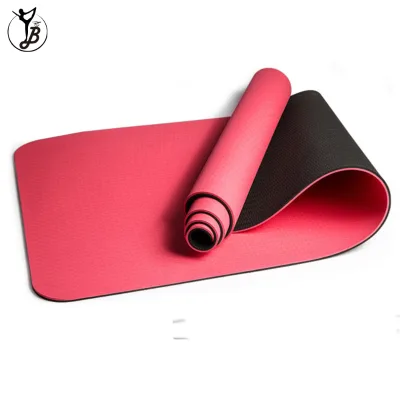


Comprehensive Sourcing Guide
Strategic Sourcing Guide for Folding TPE Yoga Mats
The global demand for home fitness equipment has elevated the Folding TPE Yoga Mat from a niche accessory to a staple in the B2B procurement landscape. For buyers navigating this sector, the distinction between a standard rolled mat and a folding variant is critical, as it dictates manufacturing complexity, packaging logistics, and end-user utility. This guide synthesizes observed market data and technical specifications to provide a disciplined framework for sourcing folding TPE yoga mats. It focuses on material integrity, dimensional standards, and supply chain verification, ensuring that procurement decisions are grounded in factual product attributes rather than marketing assertions.
Material Composition and Structural Integrity
The core of any TPE yoga mat sourcing strategy lies in the material composition. TPE (Thermoplastic Elastomer) is frequently cited as a preferred alternative to PVC due to its balance of elasticity, durability, and environmental profile. However, the market presents a complex array of material claims. While TPE is the primary focus for this category, observed product listings indicate that some manufacturers may blend TPE with other materials such as EVA, Cotton, Foam, Rubber, or PVC to achieve specific performance characteristics.
When evaluating a folding TPE mat, buyers must verify the specific polymer blend. The folding mechanism introduces stress points that require a material with high tensile strength and memory. A pure TPE construction typically offers superior grip and non-slip properties compared to pure EVA, which can be prone to hardening over time. The observed data highlights specific models where TPE is the primary material, while others list mixed compositions. Procurement teams should request a Material Safety Data Sheet (MSDS) or a certificate of analysis to confirm the percentage of TPE versus other fillers. This verification is essential because the "folding" attribute relies on the material's ability to return to its original shape without creasing permanently after repeated folding cycles.
Technical Specifications and Dimensional Standards
Precision in dimensions is a non-negotiable requirement for B2B buyers, particularly when dealing with international shipping and retail packaging. The observed market data reveals a range of standard dimensions, with the most common configuration being 183cm in length by 61cm in width. However, variations exist, such as 180cm x 66cm or 173cm x 61cm. The thickness is equally critical, with observed values ranging from 0.4cm to 0.8cm, and a specific standard noted at 6mm.
For folding mats, the thickness specification often dictates the folding pattern. A 6mm mat, as seen in specific model listings like BSM02 and HD-YTPE06A, provides a standard level of cushioning for joint protection. Thinner mats (0.4cm) may be easier to fold but offer less comfort, while thicker mats (0.8cm) might require a more complex folding mechanism to remain compact. Buyers must explicitly confirm the thickness tolerance, as a deviation of even 1mm can affect the folding fit and the final packaged volume.
The following table summarizes the observed dimensional and weight variations in the current market to assist in specification verification:
| Attribute | Observed Standard Range | Specific Observed Values | Notes for Verification |
|---|---|---|---|
| Length | 173cm - 183cm | 183cm, 180cm | Verify if "Customized" options are available for specific retail needs. |
| Width | 61cm - 66cm | 61cm, 66cm | Ensure width consistency affects the folding symmetry. |
| Thickness | 0.4cm - 0.8cm | 0.4cm, 0.6cm, 0.8cm, 6mm | 6mm is a common standard; verify if it matches the folding mechanism. |
| Weight | ~1100g | 1100g | Weight impacts shipping costs; confirm if it includes packaging. |
| Model Reference | Variable | BSM02, HD-YTPE06A, TP19-EVAMT-MT | Cross-reference model numbers with physical samples. |
Compliance, Certification, and Safety Verification
In the B2B procurement of fitness equipment, compliance with safety and environmental standards is paramount. While specific certification statuses like CE or FSC are mentioned in background data, buyers must treat these as potential attributes rather than guaranteed facts for every supplier. The presence of "Eco-Friendly" and "Non-Slip" features in product descriptions suggests a market trend toward safer materials, but these claims require third-party validation.
Buyers should not assume that a product labeled as TPE automatically meets all international safety standards. The sourcing process must include a request for current test reports regarding phthalate content, heavy metals, and flammability. For folding mats, the mechanical safety of the folding mechanism is also a compliance concern; the mat must not have sharp edges or pinch points when folded. If the target market requires specific certifications, the buyer must explicitly state this in the Request for Quotation (RFQ) and require the supplier to provide valid, dated certificates from accredited laboratories. Relying on a supplier's verbal assurance or unverified background data regarding certifications can lead to significant compliance risks and potential product recalls.
Cost Drivers and Pricing Dynamics
Understanding the cost structure of folding TPE yoga mats is essential for budgeting and margin analysis. The observed price range in the market spans from $0.90 to $18.50 USD. This wide variance is driven by several factors, including material quality, thickness, customization level, and order volume. The lower end of the price spectrum likely corresponds to thinner mats (0.4cm) with minimal customization or standard packaging, while the higher end reflects thicker mats (6mm+), premium TPE blends, and extensive OEM services.
A significant cost driver is the customization of the product. The market data indicates that customization is available, including logo printing and specific color options. Customization typically increases the unit cost and may introduce additional setup fees. Furthermore, the packaging method influences cost; options range from simple rolling with OPP film to more robust carton packaging with carry straps. The observed Minimum Order Quantity (MOQ) varies significantly, ranging from 20 pieces to 10,000 pieces. Suppliers with lower MOQs (e.g., 20 PCS) may charge a premium per unit due to the lack of economies of scale, whereas high-volume orders can negotiate lower unit prices. Buyers must balance the desire for low MOQs with the need for cost efficiency, understanding that the "folding" feature itself adds manufacturing complexity that can impact the base price.
Supplier Evaluation and Operational Capabilities
Selecting the right supplier requires a rigorous evaluation of their operational capabilities, particularly regarding their ability to handle the specific requirements of folding mats. The origin of the products is predominantly China, with specific mentions of Jiangsu as a production hub. This regional concentration suggests a mature supply chain for yoga equipment, but it also necessitates due diligence on individual factory capabilities.
Key evaluation criteria should include the supplier's experience with folding mechanisms. Not all TPE manufacturers have the tooling or expertise to produce mats that fold cleanly without damaging the material structure. Buyers should request samples of the folding action to test the durability of the creases. Additionally, the supplier's flexibility in handling different packing requirements is crucial. Observed packing methods include "Carton," "Rolling by OPP Film," and "Paper Wrap / Carry Strap." The ability to switch between these methods based on the buyer's logistics needs is a strong indicator of a capable supplier.
Payment terms and order acceptance policies also play a role in supplier selection. The market data shows that some suppliers accept small orders and offer various payment methods, including PayPal, Western Union, TT, and Trade Assurance. These options provide a layer of security for buyers, especially when dealing with new suppliers. However, the presence of these options does not guarantee quality; they should be viewed as facilitators for the transaction rather than substitutes for quality assurance.
Quality Control and Long-Term Procurement Strategy
Implementing a robust quality control (QC) protocol is the final pillar of a successful sourcing strategy for folding TPE yoga mats. Given the mechanical nature of the folding feature, QC must go beyond visual inspection. Buyers should establish a sampling plan that includes stress testing the folding mechanism. This involves folding and unfolding the mat a specific number of times to check for material fatigue, cracking, or permanent deformation.
Long-term procurement considerations involve building a relationship with suppliers who can maintain consistency over time. The observed data shows that product models vary, with some being specific (e.g., TLM-YM-023) and others being generic (e.g., TPE yoga mat). Buyers should aim to work with suppliers who can standardize their production to ensure that every batch meets the same specifications. This is particularly important for branding, where consistency in color, texture, and folding performance is vital for customer satisfaction.
Furthermore, buyers should consider the lifecycle of the product. A mat that folds well initially but degrades quickly will damage the buyer's brand reputation. Therefore, the procurement strategy should include a clause for post-shipment quality checks and a clear process for handling defects. By focusing on these technical and operational details, buyers can navigate the complexities of the Folding TPE Yoga Mat market and secure a supply chain that delivers high-quality, reliable products.
Conclusion
Sourcing folding TPE yoga mats requires a meticulous approach that balances technical specifications, material science, and supply chain logistics. The observed market data provides a clear picture of the available options, from the 183cm x 61cm standard dimensions to the various thicknesses and packaging methods. However, the diversity of materials and the variability in pricing and MOQs necessitate a disciplined verification process. By prioritizing material integrity, demanding proof of compliance, and implementing strict quality control measures, buyers can mitigate risks and build a sustainable procurement strategy. The folding feature adds a layer of complexity that distinguishes these mats from standard rolled versions, making supplier expertise and product testing essential components of the decision-making process. Ultimately, successful sourcing in this category depends on the buyer's ability to translate observed market facts into concrete, actionable procurement requirements.
FAQs
What are the standard dimensions for folding TPE yoga mats?
Standard dimensions are typically 183cm by 61cm, though variations like 180cm by 66cm exist. Buyers should verify specific thickness options ranging from 0.4cm to 0.8cm or 6mm to ensure compatibility with folding mechanisms.
Can I customize the logo and packaging for these mats?
Yes, customization is available for logos and packaging methods such as cartons or paper wraps. Buyers can request specific packing configurations like 20 pieces per carton or rolling by OPP film to meet their branding needs.
What is the minimum order quantity for TPE yoga mats?
Minimum order quantities vary significantly, ranging from 20 pieces to 10,000 pieces depending on the supplier. Lower MOQs like 20 PCS may incur higher unit costs, while larger orders often secure better pricing tiers.
Which materials are used in folding yoga mats?
TPE is the primary material, but some listings include blends with EVA, Cotton, Foam, Rubber, or PVC. Buyers must verify the specific polymer composition to ensure the mat meets durability and non-slip requirements.
How does the price range vary for these products?
Prices range from 0.90 to 18.50 USD based on material quality, thickness, and customization levels. Thicker mats with premium features or extensive OEM services typically command higher prices than standard rolled versions.
Where are these yoga mats manufactured?
Products originate primarily from China, with specific manufacturing hubs noted in Jiangsu. Buyers should confirm the exact origin to assess logistics costs and ensure the supplier meets regional quality standards.
What payment methods are accepted by suppliers?
Suppliers commonly accept PayPal, Western Union, TT, and Trade Assurance for transactions. These options provide security for buyers, especially when placing orders with varying minimum quantities or customization requirements.